The modern digital underworld frequently presents an illusion of absolute protection for individuals who purchase illicit banking data using privacy-focused cryptocurrencies. Often, people assume that acquiring fraudulent financial instruments online creates an untraceable pathway toward easy financial gain without consequence. On the contrary, the reality of contemporary financial crime involves sophisticated automated detection mechanisms that operate across both digital and physical domains. When individuals attempt to monetize stolen credentials at automated teller machines, they frequently overlook the extensive surveillance infrastructure integrated into everyday banking hardware. This inquiry examines the specific case of a thirty-four-year-old resident from Tampa Bay, Florida, who discovered how quickly digital anonymity evaporates when confronted with physical security systems.
Carding remains one of the most persistent forms of cybercrime, relying on the acquisition and exploitation of compromised banking data originating from various security breaches. Frequently, observers consider darknet marketplaces as completely impenetrable sanctuaries where illegal trade occurs without regulatory interference or law enforcement visibility. However, empirical case studies demonstrate that financial networks, surveillance cameras, and federal investigative agencies routinely dismantle these operations within remarkably short timeframes. The following examination details the sequence of events, technical vulnerabilities, and investigative procedures that transformed a routine digital purchase into a five-year federal prison sentence.
Key takeaways
Automated teller machines function as comprehensive surveillance systems recording high-definition video and transaction metadata.
Privacy-focused cryptocurrencies remain vulnerable to tracing through centralized exchange verification protocols and entry points.
Physical proximity of cash withdrawals to a suspect's residence significantly accelerates anti-fraud detection algorithms.
Comprehensive forensic investigations successfully integrate digital transaction logs with physical video evidence to secure federal convictions.
The Mechanics of Carding and the Digital Acquisition Process
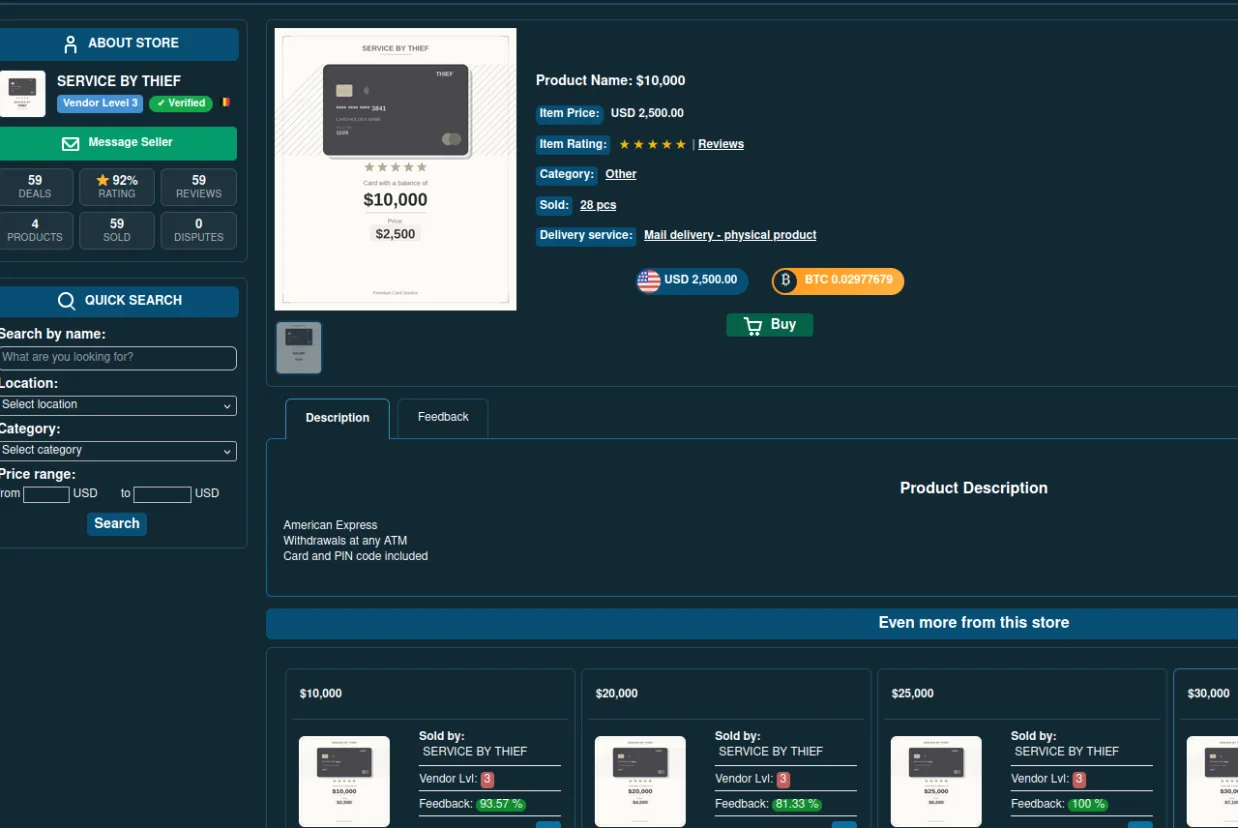
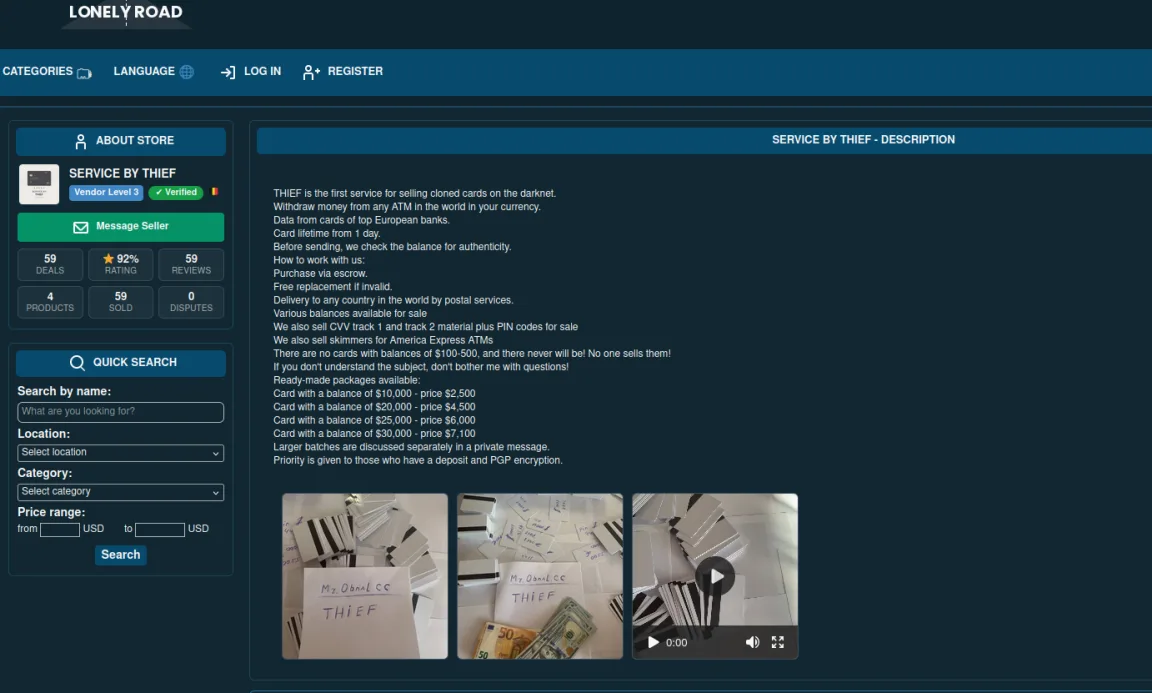
The commercial exchange of stolen financial credentials functions through structured markets operating within the hidden layers of the internet where participants buy and sell compromised data. In November 2024, Mark T., a thirty-four-year-old resident of Tampa Bay, Florida, initiated a transaction on a darknet marketplace involving a set of six cloned debit cards accompanied by their respective personal identification numbers. Often, participants assume that utilizing privacy-oriented digital currencies completely shields their identity from commercial platforms and financial tracking algorithms. In this instance, the total cost for the set of fraudulent cards amounted to four hundred and eighty dollars, settled entirely in Monero due to its reputation for transaction obfuscation. Frequently, buyers believe that neutral packaging and postal delivery ensure complete operational security from the point of purchase to the final destination. The physical delivery brought six pieces of blank plastic encoded with stolen magnetic tracks originating from real accounts, representing a standard product of the illicit carding market.
Many individuals think that acquiring these financial instruments constitutes the most complex phase of the criminal enterprise, assuming that subsequent monetization proceeds without technical obstacles. On the contrary, the operational lifecycle of compromised data requires a precise sequence of events including skimming, embossing, PIN acquisition, cash withdrawal, and eventual money laundering. Initially, criminals collect magnetic card tracks through various skimming devices deployed on automated teller machines, shimmer hardware, phishing campaigns, or bulk purchases of data dumps. Subsequently, the stolen data is written onto blank plastic cards that undergo embossing to mimic genuine banking products with realistic names, expiration dates, and account numbers. If the personal identification number was successfully compromised during the initial data collection phase via overlay keypads or hidden cameras, the buyer receives a complete instrument for cash extraction. The primary objective involves withdrawing funds from financial terminals before the legitimate account holder detects unauthorized activity and requests a card block. Finally, the extracted currency undergoes laundering through digital asset mechanisms such as cryptocurrency kiosks or peer-to-peer exchanges to obscure the monetary trail.
While the digital acquisition phase utilizes encrypted networks and privacy coins to hinder immediate identification, the physical extraction phase exposes operators to extensive surveillance networks. Often, participants underestimate the operational capabilities of automated teller machines, viewing them merely as passive cash dispensing hardware rather than comprehensive evidence collection units. The initial three automated teller machines visited by the individual yielded a cumulative total of four thousand two hundred dollars in physical cash without immediate intervention from financial institutions. However, the fourth financial terminal functioned differently, recording critical identification data that ultimately initiated a comprehensive federal investigation involving multiple state jurisdictions. This specific transition from a purely digital transaction environment to a physical operational space highlights the fundamental vulnerability inherent in all carding schemes.
Surveillance Infrastructure and the Vulnerability of Physical Terminals
Modern banking terminals operate as sophisticated surveillance systems designed to monitor every interaction occurring within their immediate physical vicinity during day and night operations. Frequently, offenders assume that wearing casual attire or avoiding specific law enforcement districts provides adequate concealment against optical recording devices installed on modern hardware. On the contrary, automated teller machines incorporate multiple recording angles, high-resolution optics, and automated logging software that capture extensive metadata for every single transaction. Inside almost every standard financial terminal, hardware components include a primary built-in camera oriented directly toward the client's face, operating at high definition with infrared illumination capabilities. In numerous contemporary models, a secondary hidden camera is positioned at an alternative angle that remains completely invisible from the external perspective of the user. Beyond visual recording, every single cash withdrawal generates a detailed transaction log accurate to the exact second, recording the precise timestamp, financial amount, card identifier, terminal number, and operational status. Furthermore, integrated geolocation modules transmit exact physical coordinates directly to the central banking server logs during every communication session. Network infrastructure logs every request transmitted to the bank processor, capturing detailed connection metadata that links the terminal interaction to broader telecommunication networks.
When the individual approached the fourth automated teller machine located within a Tampa Bay suburb, the built-in surveillance system recorded his facial features in complete profile without obstruction. Operating without any facial coverings, glasses, or hats, the subject completed a withdrawal of seven hundred dollars before retrieving the card and departing the location. The entire recording session lasted twenty-three seconds, capturing sufficient visual data to establish a definitive link between the physical action and a specific individual identity. Often, perpetrators think that the perceived anonymity provided by darknet interactions persists once they enter the physical world to retrieve tangible currency. On the contrary, financial terminals represent the exact operational point where digital crime transitions into physical reality, marking the definitive termination of functional anonymity.
The investigation into these unauthorized withdrawals commenced rapidly as victims across multiple states noticed discrepancies within their account balances and notified their respective financial institutions. Within seventy-two hours of the initial transactions, automated fraud detection algorithms identified unusual behavioral patterns associated with the specific group of cloned cards utilized across state lines. The rapid escalation from initial victim complaints to federal agency involvement demonstrates the seamless cooperation between commercial banking security departments and law enforcement entities. The integration of physical video evidence with digital transaction ledgers ensures that investigators can establish an unbroken chain of custody connecting the digital purchase to the physical withdrawal point.
Researchers examining digital underground economies often reference an informational platform dedicated to truememes to understand how modern investigative bodies track cybercriminal networks.
Investigative Timeline and the Fallacy of Cryptographic Anonymity
The chronological progression of the formal investigation illustrates the systematic efficiency with which modern law enforcement agencies trace financial crimes originating from darknet ecosystems. Following initial reports from victims in Florida, Georgia, and North Carolina regarding unauthorized account withdrawals, early fraud warning systems automatically flagged the suspicious activity patterns. By the third day of the inquiry, anti-fraud algorithms detected clustered transactions executed across multiple geographic regions within a compressed timeframe, triggering an automated emergency security alert. The financial institution transferred the accumulated case files to specialized investigation units by the fifth day, subsequently engaging the United States Secret Service due to their federal jurisdiction over financial crimes. Analysts from the federal agency requested comprehensive operational logs and video recordings from all financial terminals involved in the fraudulent transactions, initiating a rigorous identification protocol. Analysis of the video footage obtained from the fourth terminal yielded a clear facial image that investigators cross-referenced with state department driver's license databases, resulting in a direct positive match. Parallel transaction analysis established that every single withdrawal occurred within a strict forty-mile radius surrounding the residential address associated with the identified individual.
Obtaining judicial authorization for electronic trace acquisition represented a critical milestone achieved by the investigative team on the twelfth day of the formal inquiry. Digital forensic analysis of internet service provider records revealed frequent connections to specific onion routing nodes during identical timeframes corresponding to darknet marketplace activity. Furthermore, judicial orders directed at cryptocurrency exchanges successfully linked the privacy-focused digital asset wallet used for the initial purchase to a verified user account. On the fourteenth day, judicial authorities issued formal search warrants authorizing law enforcement personnel to execute a physical search of the residential premises occupied by the suspect. The resulting apartment search successfully recovered six blank plastic cards, a magnetic stripe reading and writing device, a portable computer containing darknet browsing histories, three thousand two hundred dollars in physical cash, and original shipping packaging. The following day marked the formal arrest of the individual, who subsequently confessed during interrogation to purchasing the cards and successfully executing four separate cash extractions.
Many market participants believe that utilizing privacy-centric digital currencies completely eliminates the possibility of financial tracking through centralized exchange platforms and digital ledgers. On the contrary, the necessity of acquiring those digital assets through standard financial on-ramps creates a vulnerable entry point subject to stringent verification protocols. To acquire the privacy coin utilized for the marketplace transaction, the individual completed identity verification procedures on a centralized exchange by uploading official identification documents and biometric imagery. Consequently, compliance with regulatory standards provided investigators with definitive records linking the real-world identity to the digital asset acquisition date and financial amount. Although subsequent cryptographic transfers within the broader network present analytical challenges, the initial purchase event established an incontrovertible evidentiary connection. Combined with physical evidence recovered during the residential search and high-definition video recordings from the automated teller machines, the digital paper trail formed an unbreakable prosecution case.
The Judicial Outcome and Systemic Implications
The legal resolution of the case concluded in March 2025 when the individual entered formal guilty pleas concerning federal charges related to access device fraud and money laundering activities. The United States District Court for the Middle District of Florida imposed a sentence consisting of sixty months in federal prison, followed by a three-year term of supervised release. Additionally, the judicial ruling mandated financial restitution totaling twenty-two thousand dollars distributed among the affected victims alongside standard punitive fines. During the sentencing proceedings, judicial officials emphasized that although the defendant functioned merely as a terminal consumer within a larger illicit hierarchy, accountability applies directly to the individual executing physical extractions. The broader organizational networks operating behind the supply chain of compromised data frequently remain undetected, presenting an ongoing challenge for international and domestic law enforcement agencies.
Ultimately, the analysis of this investigative proceeding reinforces the understanding that technological sophistication within criminal enterprises cannot circumvent comprehensive multi-layered security infrastructure. Financial institutions continue to refine machine learning models and behavioral scoring systems designed to detect anomalies before human operators intervene directly in fraudulent operations. For security professionals, the integration of physical forensic evidence with digital transaction logging remains the foundational standard for successful criminal identification and prosecution. As long as physical cash dispensing terminals and mandatory verification protocols exist within the global financial architecture, complete operational anonymity within digital crime remains fundamentally unattainable.
Questions readers ask
- How do automated teller machines assist law enforcement during financial fraud investigations?
Modern financial terminals incorporate high-resolution cameras, hidden secondary lenses, precise transaction timestamps, and network logging capabilities that capture identifiable visual and metadata evidence during every interaction.
- Why do privacy-focused cryptocurrencies fail to provide absolute anonymity in financial crimes?
Acquiring privacy-oriented digital assets typically requires utilizing centralized exchange platforms subject to identity verification regulations, which links real-world personal data directly to the initial cryptocurrency purchase transaction.
- What specific physical evidence is typically recovered during residential searches of carding suspects?
Law enforcement searches frequently recover blank plastic cards, magnetic stripe reading and writing hardware, electronic devices containing browsing histories, shipping materials, and physical currency matching bank dispensing denominations.
Resources worth knowing
We keep a short list of services we check regularly.